
Catalytic Carbon Water Filtration
What Is Catalytic Carbon Water Filtration? Activated carbon filtration uses highly porous carbon media to adsorb (grab and hold) unwanted substances from your water as it flows through the filter. Properly designed activated carbon systems can: Reduce chlorine and many related tastes/odors Improve overall flavor and clarity Help with certain organic compounds and byproducts Protect downstream equipment like Reverse Osmosis membranes We use carbon filtration in many of our Residential Solutions, Commercial Solutions, and Municipal & Government Solutions—often as a core part of Whole-Home Water Treatment. What Catalytic Carbon Is Great At Activated carbon is especially effective for: Chlorine and Chloramine Side Effects Ideal for city water that smells or tastes like a pool. → Related problem: Chlorine and Chloramine Bad Tasting and Smelly Water Helps with many Bad Tasting Water complaints and mild Smelly Water (Sulfur) situations, especially on treated city water. Chemical & Organic Contaminants (select) Reduces many taste- and odor-causing compounds, some industrial organics, and disinfection byproducts (depending on configuration). Pre-Treatment for Advanced Systems Protects and supports Reverse Osmosis, Under Sink Water Filter setups, and other equipment by taking care of chlorine and many organics first. For more complex issues—like PFAS / PFOS (Forever Chemicals), Lead Contaminants, or very high High TDS (Salinity)—we may pair carbon with Specialty Water Filtration and RO for a complete solution. When Catalytic Carbon Filtration Makes Sense You’re a strong candidate for carbon filtration if: Your water smells or tastes strongly of chlorine Coffee, tea, and ice never taste quite right Guests comment on the taste or smell of your tap water You want better showers and baths (less chemical odor) You’re on city water and want a simple, high-impact upgrade On wells, we often deploy carbon as a polishing and taste tool after Well Water Treatment has dealt with iron, sulfur, and sediment. Whole-Home vs. Point-of-Use Carbon Filtration We use carbon in two primary ways: Whole-Home Carbon (Point-of-Entry) Installed where water enters your home or building as part of Whole-Home Water Treatment, this approach: Reduces chlorine taste and odor throughout the property Makes showers and baths more comfortable Helps protect rubber seals, plastics, and certain equipment Improves water for laundry, dishwashing, and general use It’s especially useful on municipal water with noticeable Chlorine and Chloramine. Point-of-Use Carbon (Drinking Water) Located under sinks or at specific taps, often combined with: Under Sink Water Filter systems Reverse Osmosis units (as pre- and post-filters) This setup: Targets water you drink, cook with, or brew beverages from Provides an alternative to bottled water Offers an extra layer of polish even when you already have whole-home treatment We’ll help you decide whether you need whole-home carbon, point-of-use carbon, or both. How We Design Carbon Filtration Systems We don’t treat carbon as a one-size cartridge. We engineer it as part of your total water plan. 1. Assess & Test We look at: Whether you’re on city water or a well Existing Common Water Problems like Bad Tasting Water, Smelly Water (Sulfur), or visible Sediment Any specific concerns: PFAS / PFOS (Forever Chemicals), Lead Contaminants, High TDS (Salinity), etc. Then we test key parameters and review any lab results you already have. 2. Choose the Right Type & Placement Based on your needs, we may recommend: Backwashing carbon tanks for whole-home use Cartridge-based solutions for under-sink or small applications Catalytic carbon variants when dealing with stubborn issues (often alongside Specialty Water Filtration) We also decide whether carbon should come: Before or after Water Softener Systems Ahead of Reverse Osmosis and Under Sink Water Filter units Combined with Well Water Treatment for wells that need polishing after iron/sulfur control 3. Professional Installation We install carbon systems: With proper bypasses and shutoff valves Sized for your flow and pressure Integrated with any existing Whole-Home Water Treatment, Water Disinfection/Ultra Violet, and Pump, Pressure, & Storage Tank Services 4. Maintenance & Media Replacement Activated carbon has a finite life—once it’s full, performance drops. Through Water Treatment System Installation & Maintenance, we: Track estimated media or cartridge life based on your water and usage Replace media and cartridges on schedule Inspect for channeling, pressure drops, or flow issues Adjust the system as your needs or water quality change Where Catalytic Carbon Fits in Your System Activated carbon is a powerful tool, but it’s only one part of the picture. We often combine it with: Whole-Home Water Treatment to cover broad household needs Water Softener Systems to handle Hard Water and scale Well Water Treatment to manage Iron & Rust Staining, Hydrogen Sulfide Bacteria, and Smelly Water (Sulfur) Reverse Osmosis and Under Sink Water Filter systems for premium drinking water Specialty Water Filtration for targeted contaminants Water Disinfection/Ultra Violet for microbiological safety We’ll show you what carbon does well and where other technologies should take the lead.
Specialty Water Filtration

What Is Specialty Water Filtration? Specialty water filtration goes beyond standard sediment and carbon filters. These systems use purpose-designed media and technologies to address more challenging issues, such as: Emerging contaminants like PFAS / PFOS (Forever Chemicals) Metals and infrastructure-related issues including Lead Contaminants Certain nuisance metals beyond basic iron and manganese Elevated High TDS (Salinity) and problem mineral blends Complex combinations of Common Water Problems that require more than a “one-size” cartridge We design these systems after a thorough water test, then integrate them with your existing treatment (or build a complete plan from the ground up). When Do You Need Specialty Filtration? You may need specialty filtration if: You’ve had lab results flag specific contaminants (like lead or PFAS) Standard filters or softeners haven’t solved your water concerns You’re near industrial, agricultural, or legacy infrastructure areas You’re on a well with unusual test results or complex water chemistry You want extra protection for kids, immune-compromised family members, or guests If something showed up on a report and you’re not sure what to do next, this is where specialty filtration comes in. What Specialty Filtration Can Address Depending on testing and your situation, we may design systems for: Lead & Infrastructure-Related Metals For properties with older plumbing, fixtures, or service lines, we may recommend: Point-of-entry media designed to help reduce lead and certain metals Point-of-use filtration, often paired with Reverse Osmosis and Under Sink Water Filter at key taps → Related issue: Lead Contaminants PFAS / PFOS (Forever Chemicals) For concerns about PFAS/PFOS and related compounds, we may combine: Specialty adsorption media tuned for PFAS Polishing via Reverse Osmosis at critical drinking-water points Strategic placement at the whole-home or point-of-use level → Related issue: PFAS / PFOS (Forever Chemicals) High TDS & Complex Mineral Blends For water that tastes salty, heavy, or “chemical,” especially with High TDS (Salinity), we design systems using: Specialty media and blending strategies Reverse Osmosis at key taps for premium drinking water Integration with Whole-Home Water Treatment to protect plumbing and fixtures Combined Nuisance Problems For water that has several issues at once—like taste, odor, color, and specific metals—we may deploy: Layered media beds combining multiple specialty media types Upstream Well Water Treatment for iron, sulfur, and staining Catalytic Carbon Water Filtration and other tools for taste and odor Water Softener Systems for Hard Water as part of a full solution We always design systems so each stage supports the others, instead of randomly stacking units and hoping for the best. How We Design Specialty Filtration Systems Step 1: Detailed Testing & Review We begin with: Lab-grade testing focused on the contaminants you’re concerned about A review of your water source (city vs. well), plumbing, and current equipment A conversation about how you use water—drinking, cooking, process, guests, or customers Step 2: Treatment Strategy Based on the results, we develop a plan that may include: Whole-home specialty filtration at the point of entry Point-of-use systems (often Reverse Osmosis + specialty cartridges) Combinations of both for layered protection We’ll explain what each piece does, what it doesn’t do, and how it fits with existing systems like Whole-Home Water Treatment and Well Water Treatment. Step 3: Professional Installation We install your specialty filtration: In the right sequence with softeners, carbon, UV, and other equipment With bypass and serviceability built in In a way that respects flow, pressure, and code requirements We can also integrate specialty filters with: Residential Solutions Commercial Solutions Municipal & Government Solutions Supporting Pump, Pressure, & Storage Tank Services where needed Step 4: Maintenance & Monitoring Specialty media and cartridges must be replaced on schedule to stay effective. Through Water Treatment System Installation & Maintenance, we: Track media and cartridge life Perform periodic testing, as appropriate Inspect for flow, pressure, and performance changes Adjust your system as your water or usage evolves Specialty Filtration for Homes, Businesses & Systems Homeowners We help families who: Want more than basic taste and odor improvement Have test results showing specific contaminants Are building or renovating and want to “future-proof” water quality Want to stop guessing which store-bought filter might help Our specialty solutions plug into your larger Residential Solutions plan so the entire home works as a system. Businesses & Commercial Facilities Within Commercial Solutions, specialty filtration supports: Foodservice, hospitality, and beverage operations sensitive to taste and quality Healthcare and office environments where staff and patients expect clean, consistent water Light industrial and specialty processes that require specific water quality for equipment or product consistency Systems are sized for your peak flows and operational needs, and we can layer in Pump, Pressure, & Storage Tank Services and long-term Water Treatment System Installation & Maintenance. Municipal & Government Applications Through Municipal & Government Solutions, we work with: Small systems and facilities dealing with well-documented contaminant concerns Public-facing buildings where test results must be addressed proactively Projects that need engineered, documented, and maintainable specialty treatment solutions
Under Sink Water Filter
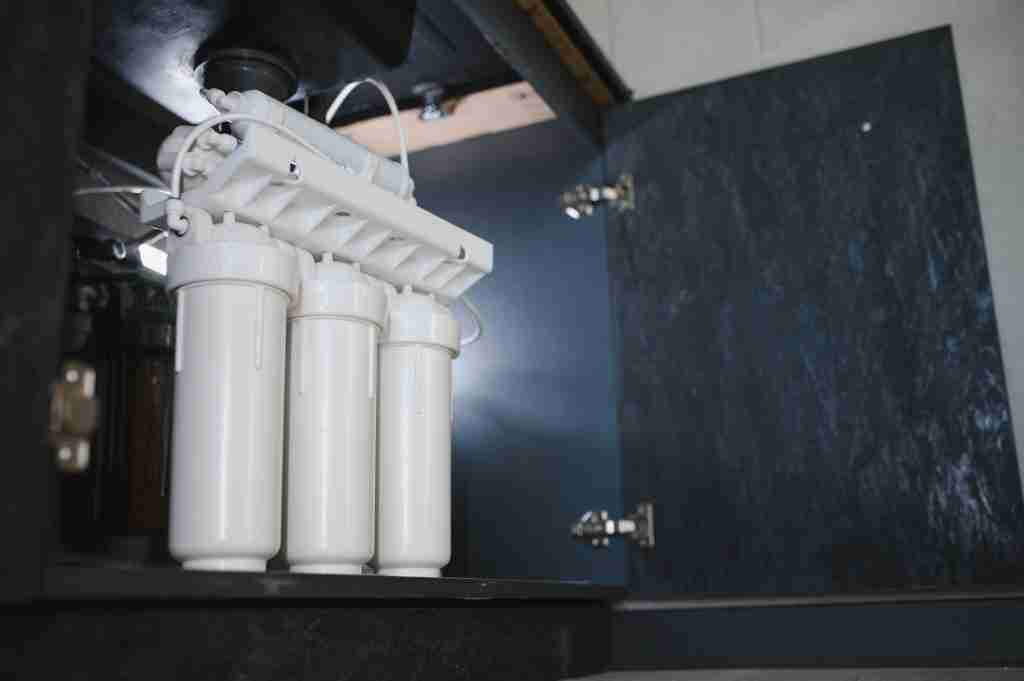
What Is an Under Sink Water Filter? An under-sink water filter is a compact point-of-use system installed below a kitchen or bathroom sink (or in a nearby cabinet). It treats water for: A dedicated drinking-water faucet Your main kitchen faucet (in some configurations) Refrigerators and ice makers (when plumbed in) Compared to small pitchers and faucet-mount filters, under-sink systems: Offer higher flow and capacity Provide more robust filtration options Stay out of sight while working continuously We design under-sink filters as part of your broader Residential Solutions or light Commercial Solutions plan. When an Under-Sink Filter Makes Sense Under-sink filtration is ideal if: You don’t like the taste of your tap water You’re tired of filling pitchers or buying bottled water You want a single, convenient source of better water for drinking and cooking You want to polish water after Whole-Home Water Treatment or softening You’re not ready for full Reverse Osmosis but want a solid upgrade If your biggest concern is what goes in glasses, coffee, and pots, an under-sink filter is often the perfect starting point. What Under-Sink Filters Can Address Depending on your water test and goals, we can configure under-sink filters to help with: Chlorine and chemical tastes/odors Great for city water that smells or tastes like a pool. → Related: Chlorine and Chloramine, Catalytic Carbon Water Filtration Bad Tasting Water Metallic, flat, musty, or “off” flavors that make you avoid the tap. → Related: Bad Tasting Water Sediment and fine particles Small particles that slip past basic faucet screens. → Related: Sediment Some nuisance metals and contaminants When combined with appropriate cartridges or used as pre/post-treatment around Reverse Osmosis or Specialty Water Filtration. For more advanced needs—like High TDS (Salinity), PFAS / PFOS (Forever Chemicals), or certain Lead Contaminants—we typically recommend under-sink Reverse Osmosis, often paired with additional filtration. Under-Sink Filters vs. Reverse Osmosis Both systems live under the sink, but they’re not the same: Under-Sink Filter (Standard): Usually 1–3 stages of carbon and sediment Focuses on taste, odor, and basic contaminants No storage tank in many designs Great for city water with moderate issues Under-Sink Reverse Osmosis (RO): Includes a membrane and usually a small storage tank Reduces a wider range of dissolved solids and contaminants Ideal for High TDS (Salinity), more serious taste issues, or specific concerns We’ll help you decide whether a high-performance under-sink filter is enough—or whether Reverse Osmosis is a better fit. How We Design Under-Sink Filter Solutions We don’t just grab whatever cartridge is on the shelf. Our process: 1. Talk Through Your Goals We ask: What does your water taste and smell like now? Are you on city water or a well? How many people use the kitchen daily? Do you want to feed the fridge/ice maker too? This shapes what the filter needs to handle. 2. Test Your Water We test for key indicators, which may include: Chlorine / chloramine Sediment and turbidity Hardness and High TDS (Salinity) Taste- and health-related concerns like Lead Contaminants or PFAS / PFOS (Forever Chemicals) If there are broader issues (like Iron & Rust Staining, Smelly Water (Sulfur), or Hard Water), we might recommend upstream Whole-Home Water Treatment or Well Water Treatment in addition to the under-sink system. 3. Select the Right Configuration Based on testing and usage, we may recommend: Single- or multi-stage carbon/sediment systems Under-sink filters combined with compact Reverse Osmosis Setups that also feed your refrigerator and ice maker We’ll explain what each stage does in clear, non-technical language. 4. Install & Integrate We install the filter: Cleanly under the sink or in a nearby cabinet With a dedicated drinking-water faucet or tied into existing fixtures, where appropriate With proper shutoffs and easy-access features for future service Integration with other systems (softeners, whole-home filters, UV) is done so everything works together. 5. Maintain & Monitor Through Water Treatment System Installation & Maintenance, we provide: Scheduled filter replacement Flow and taste checks Inspection of connections and fittings Adjustments if your water quality or usage changes You get reliable performance without tracking filter dates on your own. Under-Sink Filters for Homes & Businesses For Homeowners Under-sink filters are a practical fit when you: Want great drinking water at the kitchen sink Are upgrading from pitchers or faucet filters Already have whole-home solutions and just want extra polishing Want one place to fill bottles, cook, brew coffee and tea, and make ice They integrate easily with Residential Solutions, Whole-Home Water Treatment, and Water Softener Systems. For Small Offices & Commercial Spaces Within Commercial Solutions, under-sink systems can support: Break rooms and staff kitchens Small waiting-room beverage stations Conference areas where guests are offered water and coffee We can also combine them with RO or larger systems depending on demand.
Water Disinfection / UV Systems

What Is UV Water Disinfection? Ultra violet (UV) disinfection uses high-intensity light to inactivate bacteria, viruses, and other microorganisms as water flows past a UV lamp inside a treatment chamber. Unlike many chemical methods, UV: Doesn’t change the taste, smell, or color of your water Doesn’t add chemicals or byproducts at the tap Works in real time as water flows through the system We integrate UV as part of Water Disinfection/Ultra Violet solutions for homes, businesses, and community systems—especially where wells or small systems are involved. When UV Disinfection Makes Sense UV is a strong option if: You’re on a private well or small system without centralized disinfection Your well has tested positive for coliform or you’re worried about microbiological safety You want an extra barrier after Well Water Treatment or Whole-Home Water Treatment You’d like disinfection without adding chlorine at the tap Your property has guests, renters, or vulnerable family members and you want more peace of mind UV does not filter dirt or chemicals; it works best as the final step after proper filtration. What UV Can—and Can’t—Do UV systems are designed to: Inactivate bacteria, viruses, and many protozoa Provide a consistent disinfection step at the point of entry or point of use Work quietly in the background with minimal taste or appearance impact However, UV does not: Remove Sediment or particles Remove metals such as Iron & Rust Staining or Lead Contaminants Reduce hardness or High TDS (Salinity) Filter out chemicals, Chlorine and Chloramine, or PFAS / PFOS (Forever Chemicals) That’s why we always pair UV with the right pre-treatment—filters and systems that deliver clean, clear water to the UV chamber for reliable operation. How We Design UV Solutions We don’t treat UV as a plug-and-play gadget. We design it as part of a complete treatment strategy: 1. Testing & Source Review We start by: Reviewing your current and past water tests Checking for bacteria risk factors (wells, shallow sources, older plumbing) Looking at existing equipment and plumbing layout This helps us decide where UV should be installed and what needs to happen before it. 2. Pre-Treatment for UV For UV to work properly, water should be free of excess: Sediment and cloudiness Iron and manganese Color and significant organic matter To achieve that, we may include: Well Water Treatment for iron, sulfur, and staining Sediment filtration and backwashing filters Catalytic Carbon Water Filtration or Specialty Water Filtration where appropriate Water Softener Systems when Hard Water is also an issue Once the water is properly prepared, UV can do its job much more consistently. 3. UV System Sizing & Installation We size and install UV equipment based on: Your flow rates and peak demand Whether we’re treating the whole house or a specific line Electrical and plumbing considerations We commonly install UV: At the point of entry for entire-home Residential Solutions Upstream of sensitive branches for Commercial Solutions As part of more complex Municipal & Government Solutions for small systems and facilities Everything is set up for proper contact time and service access. 4. Maintenance & Monitoring Like any disinfection system, UV needs regular care. Through Water Treatment System Installation & Maintenance, we handle: Annual or scheduled UV lamp replacement Quartz sleeve cleaning or replacement when needed System inspections and performance checks Controller and alarm verification We can add UV service to your broader maintenance plan, along with filters, softeners, and other equipment. UV for Homes, Businesses & Community Systems Homeowners Under Residential Solutions, UV is ideal for: Private wells with confirmed or suspected bacteria risk Homes with kids, older adults, or immune-sensitive family members Properties used as rentals or vacation homes where usage patterns vary We pair UV with other whole-home tools like Whole-Home Water Treatment and Reverse Osmosis (for drinking water polishing) when needed. Businesses & Light Commercial With Commercial Solutions, UV supports: Small offices, clinics, and care facilities on wells or small systems Foodservice applications where microbiological safety and confidence matter Facilities needing a clear, documented disinfection step before certain uses We ensure UV is integrated properly with pre-treatment, Pump, Pressure, & Storage Tank Services, and other system components. Municipal & Government Applications Through Municipal & Government Solutions, we use UV for: Small community systems and public facilities not served by large centralized plants Projects that require non-chemical disinfection methods in specific locations Systems where we combine UV with other treatment for iron, sulfur, and taste/odor issues UV is often part of a larger plan that also includes monitoring, reporting, and ongoing maintenance. UV + Other Treatment Technologies UV is rarely the only piece of the puzzle. We often combine it with: Well Water Treatment for source quality and clarity Catalytic Carbon Water Filtration to handle taste and odor, especially on city water Specialty Water Filtration and Reverse Osmosis for targeted contaminants and drinking water Water Softener Systems for Hard Water and scale control System protections via Pump, Pressure, & Storage Tank Services We’ll show you where UV fits and what it does—and doesn’t—cover.
Well Water Treatment

Why Well Water Needs Special Attention Unlike city water, private wells aren’t monitored or treated by a utility. That means: You’re responsible for testing and treatment Water quality can change with seasons, rainfall, and nearby activity Problems may go unnoticed until staining, odors, or health concerns appear Well water often has a mix of Common Water Problems, including: Hydrogen Sulfide Bacteria and Smelly Water (Sulfur) Iron & Rust Staining and Sediment Hard Water Bad Tasting Water Lead Contaminants or metals from plumbing PFAS / PFOS (Forever Chemicals) and High TDS (Salinity) in certain areas Our job is to replace guesswork with testing, clear explanations, and engineered solutions. Signs Your Well Water Needs Treatment You may need well water treatment if you notice: Rotten-egg or sulfur smells at one or more taps Orange, brown, or black stains in sinks, tubs, and toilets Gritty or cloudy water, especially after heavy use or rain Soap that won’t lather and scale on fixtures (hardness) Metallic or salty taste in your drinking water Family members avoiding tap water or relying on bottled water Even if your water looks clear, it can still carry invisible issues—especially bacteria or certain contaminants. That’s why regular testing is essential. Our Approach to Well Water Treatment We treat the entire well water system, not just one symptom: Onsite Review & History We ask about your well’s age, depth, pump setup, and any past issues or equipment. Water Testing We test for key indicators: hardness, iron, manganese, sulfur, pH, TDS, bacteria indicators, and, when needed, specific concerns like Lead Contaminants or PFAS / PFOS (Forever Chemicals). Problem Diagnosis We connect the lab results to your symptoms—stains, odors, taste, pressure issues—and explain everything in plain language. System Design & Installation We build a treatment train that may include filtration, softening, disinfection, and polishing, then install and commission it. Maintenance & Follow-Up Through Water Treatment System Installation & Maintenance, we keep your system performing as your well and household needs evolve. Common Well Water Solutions We Use Sediment & Clarity For sand, grit, or cloudy water, we often implement: Sediment pre-filters sized for your flow Backwashing filters for heavier loads System checks to ensure Pump, Pressure, & Storage Tank Services are aligned This protects fixtures, valves, and downstream equipment. Iron, Rust & Sulfur For wells with Iron & Rust Staining, Hydrogen Sulfide Bacteria, and Smelly Water (Sulfur), we design: Oxidation and filtration systems to remove iron and manganese Sulfur treatment using aeration, specialty media, and Water Disinfection/Ultra Violet when bacteria are involved Combined solutions so iron and sulfur are handled together rather than with separate, competing filters This approach dramatically reduces stains and rotten-egg odors throughout your home. Hardness & Scale For Hard Water, which is common in well systems, we typically integrate: Water Softener Systems to reduce hardness minerals Placement after iron/sulfur treatment so softeners aren’t overloaded Coordination with Whole-Home Water Treatment to protect all fixtures and appliances You get softer-feeling water, easier cleaning, and extended equipment life. Taste, Odor & Drinking Water Quality For wells with Bad Tasting Water, High TDS (Salinity), or extra taste assurance needs, we often recommend: Catalytic Carbon Water Filtration for chemical tastes and odors Specialty Water Filtration for targeted concerns like lead or PFAS Reverse Osmosis at key taps for premium drinking and cooking water Under Sink Water Filter systems for everyday taste improvement This gives you confidence in what’s in your glass—not just what comes out of the ground. Well Water Treatment for Different Properties Single-Family Homes As part of Residential Solutions, we: Treat water at the point where it enters your home Protect showers, sinks, laundry, and appliances Add point-of-use polishing (like Reverse Osmosis) where you drink and cook Design for your household size and daily routine Farms, Shops & Small Businesses Under Commercial Solutions, we serve: Shops and barns needing reliable water for equipment and animals Home-based businesses relying on well water Small offices and facilities on private wells We prioritize both water quality and system durability. Shared Wells & Community Systems Through Municipal & Government Solutions, we assist: Small community wells and shared systems Public-sector properties on private wells Projects requiring both treatment and Pump, Pressure, & Storage Tank Services These often involve design, documentation, and long-term service planning. Why Professional Well Water Treatment Matters DIY cartridges and big-box filters rarely solve well water problems for long. With HM Northcutt, you get: Proper testing and interpretation Systems engineered specifically for well conditions Clean, code-conscious installation Long-term support built into Water Treatment System Installation & Maintenance We’re here to be your long-term water partner, not just the people who drop off equipment.
Reverse Osmosis

What Is Reverse Osmosis? Reverse osmosis (RO) is a multi-stage filtration process that pushes water through a semi-permeable membrane, removing many dissolved solids, minerals, and contaminants that basic filters can’t catch. When properly designed and installed, RO can: Dramatically improve taste and odor Reduce many dissolved minerals and salts Help with concerns about specific contaminants Provide consistent water quality for drinking, ice, and cooking We use RO as a key part of Residential Solutions and many Commercial Solutions where high-quality water really matters. When Reverse Osmosis Makes Sense RO is especially useful if: Your tap water has persistent bad taste or odor You’re dealing with High TDS (Salinity) or “heavy” tasting water You want to reduce dissolved contaminants beyond what standard filters handle You’re concerned about PFAS / PFOS (Forever Chemicals), Lead Contaminants, or similar issues (with proper system design and testing) You’re tired of buying bottled water for everyday use RO is typically installed as a point-of-use system—for example, under the kitchen sink or feeding a fridge/ice maker. How a Reverse Osmosis System Works While there are variations, most RO systems use several stages: Sediment Filtration Removes sand, grit, and larger particles that could damage the membrane. Carbon Filtration Reduces chlorine and many chemical tastes and odors that can also affect the membrane. → Related solutions: Catalytic Carbon Water Filtration RO Membrane The heart of the system, where dissolved solids, salts, and many contaminants are significantly reduced. Polishing Filter Usually a small carbon filter that improves final taste before water reaches the faucet or appliance. We often pair RO with: Under Sink Water Filter setups for targeted polishing Upstream Whole-Home Water Treatment when there are broader Common Water Problems such as Hard Water, Iron & Rust Staining, Smelly Water (Sulfur), or Chlorine and Chloramine Benefits of Reverse Osmosis With a properly designed RO system, you can expect: Better-tasting drinking water and ice Improved flavor in coffee, tea, and cooking Reduced reliance on bottled water Consistent quality for sensitive uses (formula, specialty diets, pets) Peace of mind when paired with appropriate testing and pre-treatment For many families and businesses, RO quickly becomes the go-to source for any water that goes in a glass or pot. RO for Homes vs. Businesses Homeowners As part of Residential Solutions, we typically: Install RO under the kitchen sink or in a nearby cabinet Feed a dedicated drinking-water faucet Often connect the RO line to the refrigerator/ice maker Integrate with any existing Whole-Home Water Treatment or softening system This gives you high-quality water right where you need it most without redesigning your entire home plumbing. Businesses & Facilities Within Commercial Solutions, we use RO for: Restaurants and cafés (brewed beverages, cooking, ice, soda systems) Offices and healthcare spaces (drinking stations, break rooms) Light industrial and specialty uses that need consistent low-TDS water We size commercial RO systems based on your flow rates, peak demand, and specific use cases—and pair them with Pump, Pressure, & Storage Tank Services and long-term Water Treatment System Installation & Maintenance where needed. RO and Other Water Problems RO isn’t a stand-alone cure for every issue—but it’s powerful when combined with the right pre-treatment: For hard water, we often recommend Water Softener Systems or Whole-Home Water Treatment ahead of RO to protect the membrane and plumbing. For well water with Sediment, Hydrogen Sulfide Bacteria, or Iron & Rust Staining, we may install Well Water Treatment and Water Disinfection/Ultra Violet first. For taste and odor issues from Chlorine and Chloramine, we use carbon pre-filtration and/or whole-home Catalytic Carbon Water Filtration. We design your RO system as part of a complete plan, rather than asking it to fix everything alone. Our Process for Reverse Osmosis Discuss Your Goals We start with your concerns: taste, specific contaminants, reliance on bottled water, or commercial usage needs. Test Your Water We test for hardness, TDS, disinfectants, and any suspected contaminants such as Lead Contaminants or PFAS / PFOS (Forever Chemicals) so we know what RO is being asked to handle. Design the System We choose the right size, configuration, and pre/post-treatment steps—from simple under-sink units to more robust systems for homes or businesses. Install & Commission Our team installs the system cleanly, tests performance, and checks flow and pressure at the faucet and any connected appliances. Maintain & Monitor Through Water Treatment System Installation & Maintenance, we handle filter and membrane changes, sanitization, and performance checks over time.
Water Softener Systems

Why Consider a Water Softener? Hard water is one of the most common Common Water Problems in the Lowcountry. It’s caused by elevated calcium and magnesium, which: Leave white, chalky buildup on faucets and shower doors Make it harder to rinse soaps and shampoos Cause stiff, dull laundry Force water heaters and appliances to work harder Create spots on dishes and glassware straight out of the dishwasher A properly designed softener—installed as part of Residential Solutions or a light Commercial Solutions application—helps protect your entire home or facility from the quiet, constant damage of Hard Water. What a Water Softener System Does A softener uses a controlled ion-exchange process to reduce hardness minerals in your water. When it’s sized and programmed correctly, you’ll notice: Softer-feeling water in showers and baths Less scale on fixtures, tile, and shower glass Brighter, softer laundry with less detergent Fewer spots on dishes and glassware Longer service life for water heaters and water-using appliances We install softeners as a key part of Whole-Home Water Treatment, often alongside filtration for Sediment, Iron & Rust Staining, and Chlorine and Chloramine. Signs You Need a Water Softener You may benefit from a softener if you notice: White crust on shower heads and around faucet bases Soap that never seems to rinse clean from skin or hair Towels that feel rough, even with fabric softener Cloudy film or spots on glassware and dishes Frequent scale buildup in kettles, coffee makers, and fixtures Water heaters that require frequent service or early replacement If multiple signs match what you’re seeing, it’s time to test your water and consider softening. Our Approach to Water Softening We don’t just drop in a one-size system and hope for the best. Instead, we: Measure hardness and related factors during a water test Review your plumbing layout, occupancy, and peak water use Design a softener that’s properly sized for your home or facility Integrate it into your broader Whole-Home Water Treatment plan Depending on your water, we may also address: Iron, sulfur, and staining (via Well Water Treatment and specialty media) Taste and odor (via Catalytic Carbon Water Filtration or Specialty Water Filtration) Bacterial concerns with Water Disinfection/Ultra Violet The result is a coordinated system—not just a single piece of equipment. Softeners for Wells vs. City Water On Private Wells On well water, hardness often appears alongside: Iron & Rust Staining Hydrogen Sulfide Bacteria and Smelly Water (Sulfur) Sediment and discoloration We typically position the softener after iron/sulfur treatment so the softener isn’t overloaded or damaged. That might include: Upstream Well Water Treatment filters Oxidation and backwashing media Disinfection like Water Disinfection/Ultra Violet when bacteria are involved On City Water On municipal water, hardness often pairs with: Chlorine and Chloramine Bad Tasting Water Concerns about long-term wear on plumbing and fixtures Here, we frequently combine softening with carbon-based Catalytic Carbon Water Filtration and, when appropriate, point-of-use options like Reverse Osmosis or Under Sink Water Filter as part of Residential Solutions. Water Softening for Homes, Businesses & Facilities For Homeowners We design softener systems to: Protect water heaters, dishwashers, and washing machines Make showers and baths feel better on skin and hair Reduce cleaning time and harsh chemicals for bathrooms and kitchens Improve the look and feel of laundry and linens All of this is done within the framework of Residential Solutions so your softener fits neatly with other home water needs. For Businesses & Light Commercial Within Commercial Solutions, we use softening to help: Restaurants and cafés get spotless glassware and better ice Salons, spas, and gyms deliver a nicer water experience for clients Offices and healthcare spaces protect sterilizers, heaters, and other equipment For commercial loads, proper sizing and flow configuration are especially important—which is why we handle both the engineering and the installation. Softening + Drinking Water Softened water is great for plumbing and fixtures, but many clients want an extra level of quality for drinking and cooking. We often pair softeners with: Reverse Osmosis – For premium drinking water and brewing beverages Under Sink Water Filter – For improved taste at kitchen or break room faucets This combination gives you: Treated water throughout the home or building A dedicated source of high-quality water where taste matters most Installation, Service & Maintenance A softener is only as good as its installation and upkeep. Through Water Treatment System Installation & Maintenance, we provide: Professional, code-conscious installation and startup Programming tailored to your hardness level and usage patterns Periodic inspections and performance checks Salt level checks and media evaluation System adjustments if your household or usage changes Because we also offer Pump, Pressure, & Storage Tank Services and broader Well Water Treatment, you get one team that can look at your entire water system—not just one box in the corner.
Whole-Home Water Treatment

What Is Whole-Home Water Treatment? Whole-home (point-of-entry) water treatment is installed where water enters your home, so everything benefits: Showers and baths Kitchen and bathroom sinks Laundry and dishwashers Outdoor spigots and fixtures Instead of chasing problems room by room, we treat water once at the source, often combining: Filtration for sediment and discoloration Conditioning or softening for Hard Water Odor and taste control for Chlorine and Chloramine and Smelly Water (Sulfur) Targeted solutions for specific Common Water Problems Every system is custom-designed as part of our broader Residential Solutions. Signs You May Need Whole-Home Treatment Whole-home treatment is worth a serious look if you notice: Stains, scale, or cloudy film building up on fixtures and glass Rotten-egg or chemical odors in showers and sinks Laundry that comes out dull, stiff, or discolored Visible Sediment or discoloration in tubs, toilets, or aerators Multiple issues—like Hard Water plus Iron & Rust Staining and Bad Tasting Water When problems show up throughout the house, a small point-of-use filter can’t keep up. Whole-home treatment addresses the root cause. What a Whole-Home System Can Address Because every home and source is different, we build systems from a set of proven building blocks: Sediment & Discoloration For gritty, cloudy, or discolored water, we often incorporate: Sediment pre-filters Backwashing filters sized for your flow and plumbing Well Water Treatment options when the source is a private well This helps protect fixtures, valves, and downstream equipment. Hardness & Scale For Hard Water issues like spots, scale, and soap that won’t lather, we frequently add: Water Softener Systems to reduce hardness minerals Combined conditioning and softening as part of a larger design This protects: Water heaters Dishwashers and washing machines Fixtures, shower doors, and tile Taste, Odor & Chemicals If your home is on city water or you’re worried about taste/odor from a well, we often use: Catalytic Carbon Water Filtration for chlorine and many chemical tastes Specialty Water Filtration where chloramine or specific contaminants are a concern Add-on polishing for issues like Smelly Water (Sulfur) and Bad Tasting Water This makes showers, laundry, and everyday use much more pleasant. Sulfur, Iron & Nuisance Metals For tougher issues like: Hydrogen Sulfide Bacteria Smelly Water (Sulfur) Iron & Rust Staining we may integrate: Oxidation and filtration as part of Well Water Treatment Specialty media beds tailored to iron, manganese, and sulfur Disinfection such as Water Disinfection/Ultra Violet when bacteria are involved Emerging & Health-Related Concerns For concerns about contaminants such as: Lead Contaminants PFAS / PFOS (Forever Chemicals) Elevated High TDS (Salinity) We may combine whole-home Specialty Water Filtration with targeted point-of-use options like Reverse Osmosis and Under Sink Water Filters at key taps. Whole-Home vs. Point-of-Use Treatment Whole-home treatment protects your plumbing, fixtures, and everyday use water. Point-of-use systems (like Reverse Osmosis and Under Sinks Water Filter) focus on drinking and cooking water. Most homeowners get the best results by combining the two: Whole-home treatment to solve broad issues and protect the house Point-of-use polishing at the kitchen and a few key locations We’ll help you decide what balance makes sense for your home and budget. How We Design a Whole-Home System Conversation & Inspection We start with what you’re seeing and smelling: stains, odors, taste, scale, or equipment issues. We review your plumbing, existing equipment, and how you use water. Water Testing We test for hardness, iron, sulfur, TDS, disinfectants, and other indicators tied to your concerns. If needed, we recommend lab work for things like Lead Contaminants or PFAS / PFOS (Forever Chemicals). Custom System Design Using the results, we design a system that might include Water Softener Systems, Catalytic Carbon Water Filtration, Specialty Water Filtration, Well Water Treatment, and/or Water Disinfection/Ultra Violet. Everything is sized for your home’s flow and plumbing. Professional Installation & Startup Our team installs the system, makes clean, code-compliant connections, and dials in settings based on your water and usage. Ongoing Service & Support Through Water Treatment System Installation & Maintenance, we handle media and filter changes, regular checkups, and optimizations as your needs evolve. Where Whole-Home Treatment Fits in the Bigger Picture Whole-home treatment is a core part of: Residential Solutions for homeowners on city water or wells Pre-protection for point-of-use RO and specialty filters Long-term protection for plumbing, fixtures, and appliances For more complex properties—like small businesses, shared systems, or public-sector buildings—whole-home concepts extend into Commercial Solutions and Municipal & Government Solutions, often supported by Pump, Pressure, & Storage Tank Services.